
🔊 Vibration Analysis — Overview
Vibration Analysis is used to evaluate the dynamic behaviour of structures and mechanical systems subjected to time-varying loads and excitations.
The primary objective is to identify resonance conditions, reduce vibration amplitudes, and prevent fatigue or structural failure.
At Swakshat Analytics, vibration studies are carried out with a focus on real operating environments, including vehicle-induced vibration, rotating machinery, and dynamic loading systems. We have identified resonance-induced weld failures, tube-valve failure mechanisms caused by vehicular PSD loading, and resonance conditions that physical testing had entirely missed.
Case outcome: PSD vibration analysis prevented a product recall by identifying the resonance condition causing tube-valve failures — a condition not detectable through physical testing alone.
- Natural frequency extraction
- Mode shape visualisation
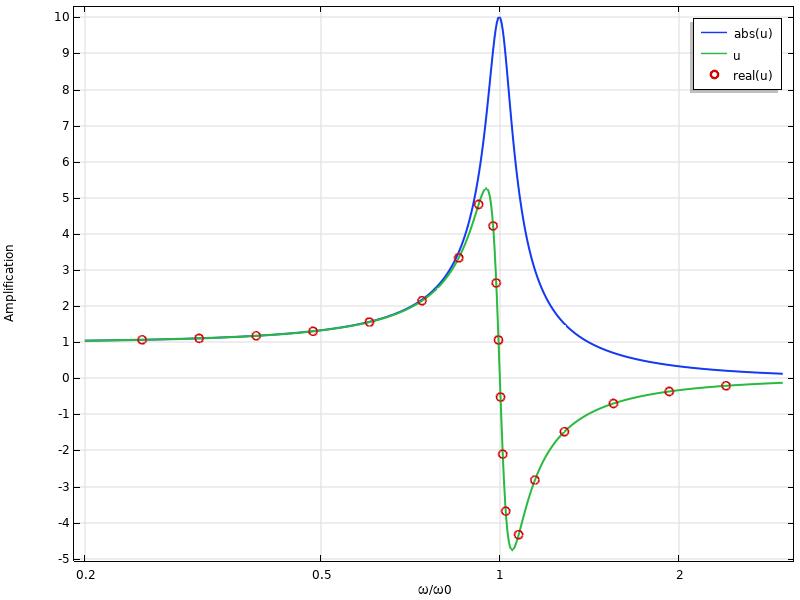
- Harmonic frequency response
- PSD random vibration (vehicular & transport)
- Weld stress under dynamic loading
- Resonance-free design iteration
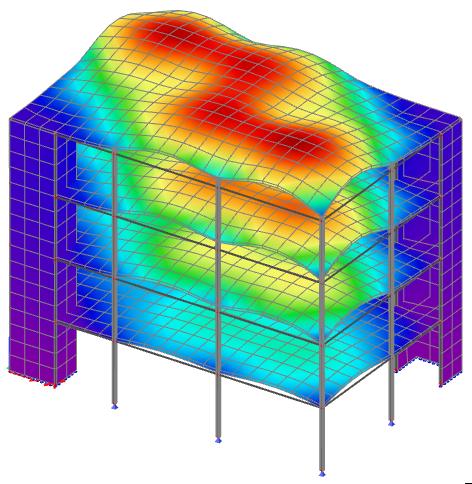 Mode Shape — Natural Frequency Extraction
🔷 Engineering Approach
Geometry & Model
- Geometry and structural model preparation
- Material and damping definition
- Named selections and support conditions
Meshing
- Mesh generation suitable for dynamic analysis
- Element formulation for wave capture
- Local refinement at joints and welds
Modal Extraction
- Modal analysis to identify natural frequencies
- Mode shape extraction and participation factors
- Frequency margin check against excitation sources
Dynamic Loads
- Harmonic loads for periodic excitation
- Random vibration (PSD inputs from road/vehicle)
- Base excitation and seismic spectra
Solver Execution
- Mode superposition for efficient solving
- Full harmonic or transient for accuracy
- Convergence and frequency resolution checks
Post-Processing
- Frequency response and amplitude plots
- Stress and deformation under dynamic loads
- Mode shape animation and resonance identification
Results are analyzed to identify resonance risks and critical frequency ranges, enabling design improvements and failure prevention.
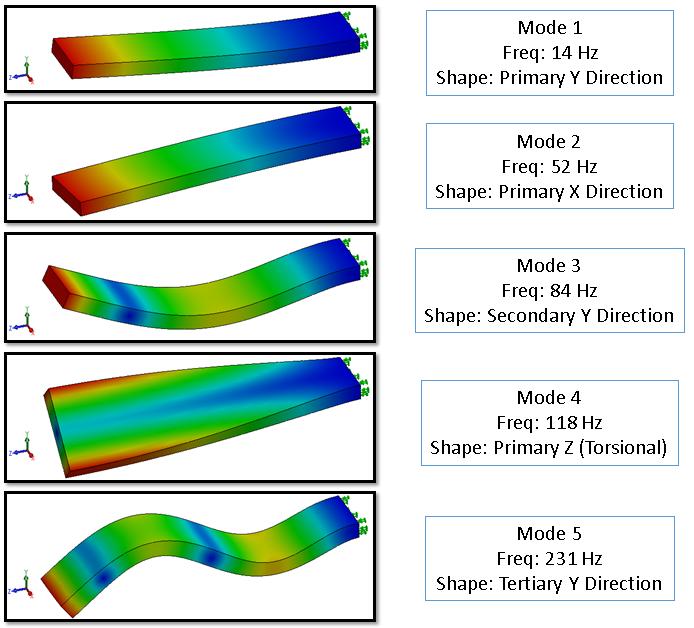 Modal Analysis — First Bending Mode Shape
Modal Analysis
Determination of natural frequencies and mode shapes of a structure — the foundation of all dynamic analysis. Identifies which frequencies will be amplified if excited by an external source.
What is evaluated:
- Natural frequencies of each structural mode
- Mode shape visualisation and animation
- Effective mass participation factors
- Frequency separation margin vs excitation sources
Purpose:
- Identify resonance conditions before deployment
- Understand structural dynamic behaviour
Used to answer: "At what frequencies will this structure resonate, and which mode shapes are dominant?"
Modal result
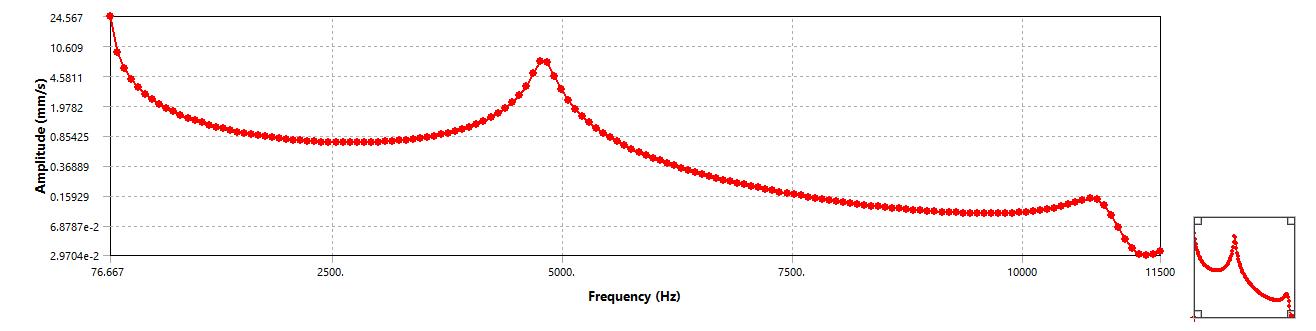 Harmonic Response — Amplitude vs Frequency
Harmonic Response Analysis
Determines the steady-state response of a structure under sinusoidal excitation as a function of frequency — essential for rotating machinery and periodic force evaluation.
What is evaluated:
- Amplitude-frequency response curves
- Phase angle evaluation
- Critical speed identification
- Damping ratio sensitivity
Applications:
- Rotating machinery (motors, pumps, fans)
- Periodic excitation systems
Used to answer: "How much does this structure vibrate at the operating frequency of my motor/pump?"
Harmonic result
PSD Input — Vehicular Road Load Spectrum
PSD Random Vibration Analysis (Key Strength)
Applies real-world stochastic (random) loading — represented as a Power Spectral Density spectrum — to determine 1σ, 2σ and 3σ stress/displacement responses. Critical for transport and field-service environments.
What is evaluated:
- PSD input from measured road/vehicle spectra
- 1σ / 2σ / 3σ stress response extraction
- Fatigue damage index calculation
- Weld joint stress evaluation under random load
- Correlation with field failure data
Applications (Your Differentiator):
- Vehicle-induced vibration — road and transport conditions
- Aerospace and automotive environments
- Field-service and operational random loading
Used to answer: "Will this structure survive years of vibration from vehicle transport or field operation?"
Response Spectrum Analysis (Seismic)
Evaluates structural response to earthquake ground motion using a response spectrum approach — required for equipment installed in seismic zones and industrial infrastructure.
What is evaluated:
- Response spectrum input (IS 1893 / zone-based)
- SRSS / CQC modal combination
- Inter-storey drift and base shear
- Equipment anchorage load assessment
Applications:
- Earthquake-resistant structures
- Equipment subjected to base excitation
- IS 1893 seismic zone compliance
Used to answer: "Is this structure / equipment seismically safe for its installation zone?"
Vibration-Based Failure Analysis
Identification of failure mechanisms caused by vibration and resonance — going beyond standard analysis to explain and prevent real-world failures in field-deployed systems.
What is evaluated:
- Resonance-induced stress amplification
- Fatigue damage accumulation at weld zones
- Failure mode identification from frequency data
Applications:
- Weld failures under cyclic loading
- Tube-valve assemblies under vehicular transport loads
- Structural fatigue due to dynamic loading
This capability directly enabled failure prevention in deployed products — a differentiator that physical testing cannot replicate.
🔷 Typical Outputs
Every vibration project delivers a complete dynamic analysis package.
| Deliverable | Description | Format |
|---|---|---|
| Natural Frequencies | Natural frequencies and mode shapes for all extracted modes | PNG / PDF |
| Mode Shapes | Animated mode shapes for each extracted natural frequency | PNG / Video |
| Freq Response | Frequency response curves — amplitude and phase vs frequency | PNG / PDF |
| Stress Response | 1σ / 3σ stress distribution under PSD or harmonic loading | PNG / PDF |
| Fatigue Index | Damage index map under PSD loading — life prediction basis | PNG / PDF |
| Resonance Report | Resonance identification and design recommendations for vibration control | |
| Engineering Report | Full methodology, resonance risk assessment and design recommendations |
🔷 Industry Applications
Tube-Valve Assemblies
PSD random vibration — vehicular transport loads causing fatigue failure at threaded connections. A proven case study differentiator.
Equipment Skids
Modal + harmonic analysis to ensure operating frequency of rotating equipment doesn't excite structural resonances.
Weld Joint Fatigue
Dynamic stress evaluation at welds under random loading — identifying high-cycle fatigue risk before failure.
Automotive & Transport
Vehicle-induced vibration on road and transport conditions — PSD analysis of components during shipping and field use.
Seismic Equipment
IS 1893 response spectrum analysis for equipment mounted in earthquake-prone zones.
Rotating Machinery
Rotating machinery excitation response — impeller, motor and fan frequencies vs structural natural frequencies.
🎯 Vibration Analysis at Swakshat Analytics
Focused on identifying and mitigating dynamic risks — ensuring improved durability, reduced failure, and reliable system performance under real operating conditions. Our PSD random vibration and failure analysis capability is a clear differentiator positioning you as a serious engineering consultancy, not a generic service provider.
Identify Resonance Before It Causes Failure
Share your CAD and operating/excitation frequency — we deliver a complete dynamic analysis within 7–12 working days.