
What is Thermal Analysis?
Thermal analysis uses the Finite Element Method to solve the heat conduction equation through solid domains — and when combined with CFD, also resolves convective heat transfer in fluids (Conjugate Heat Transfer).
The goal is to understand where heat accumulates, how it flows and whether components are thermally safe under operating conditions.
Thermal stress — caused by differential thermal expansion — is a common and often overlooked failure mechanism. Thermal analysis identifies these expansion gradients before they cause cracking or deformation in service.
- Temperature distribution across components
- Heat flux and thermal gradients
- Hot spot identification
- Insulation effectiveness
- Thermal stress coupling
- Steady-state and transient modes
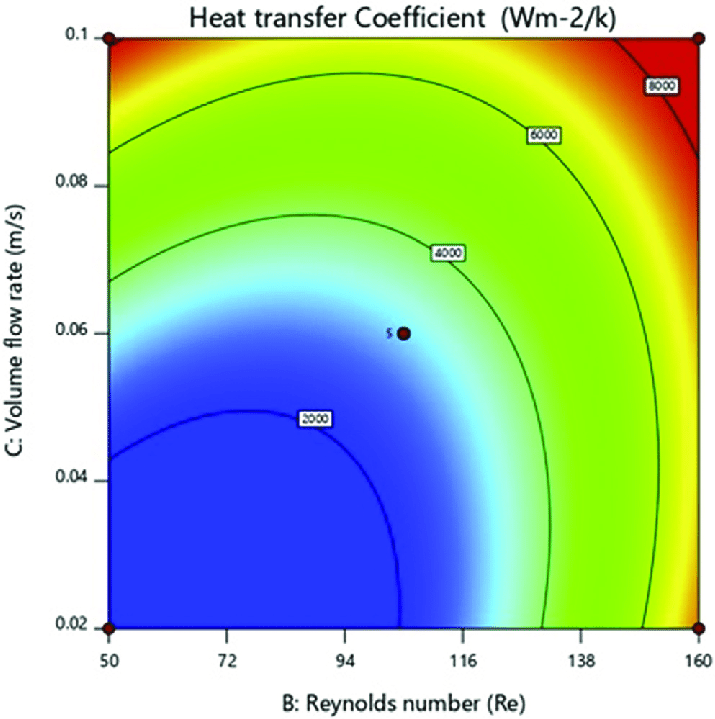 Temperature Distribution — Industrial Component
How It's Done
Geometry & Mesh
- Solid domain preparation
- Thermal contact regions defined
- Mesh refinement at interfaces and boundaries
Material Thermal Properties
- Thermal conductivity (k)
- Specific heat capacity (Cp)
- Density for transient analysis
- Temperature-dependent properties if needed
Boundary Conditions
- Heat flux or heat generation sources
- Convection coefficients (h) and ambient temperature
- Radiation (emissivity, Stefan-Boltzmann)
- Fixed temperature constraints
Solver & Post-Processing
- Steady-state: equilibrium temperature field
- Transient: temperature evolution over time
- Heat flux vectors and gradient maps
- Thermal stress (coupled structural solve)
Simulation Results
Temperature Distribution — Steady State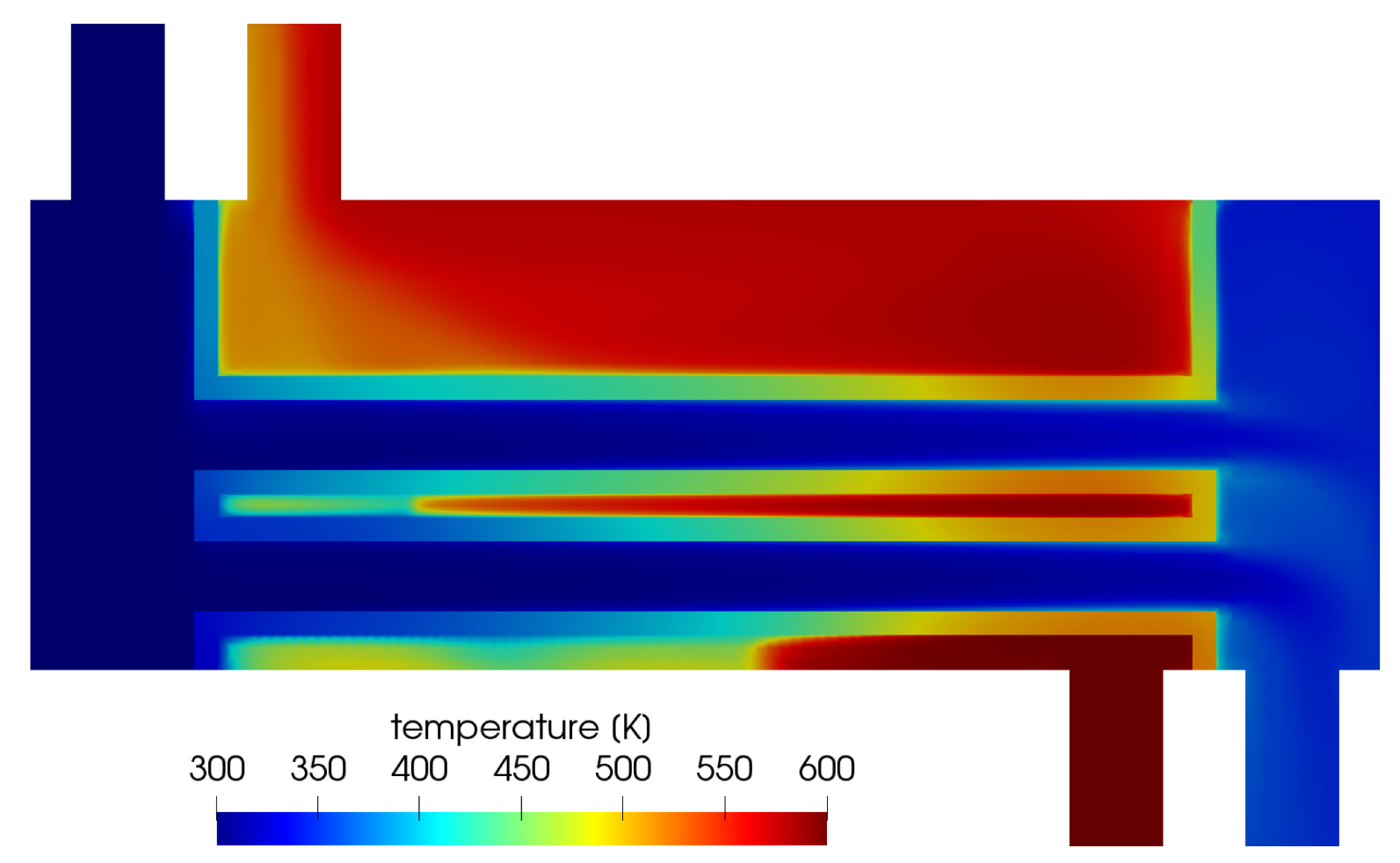 CHT — Fluid and Solid Temperature
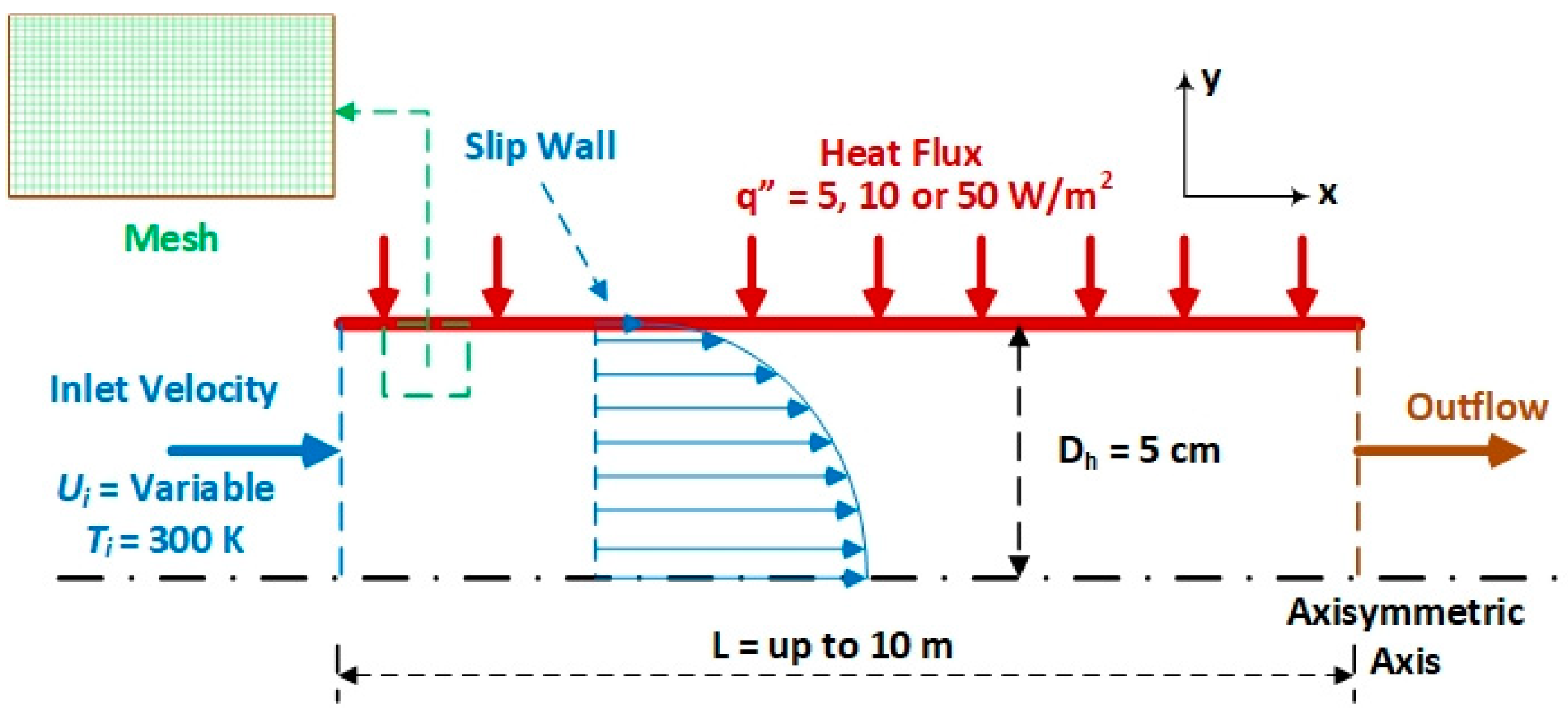 Heat Flux Vector Distribution
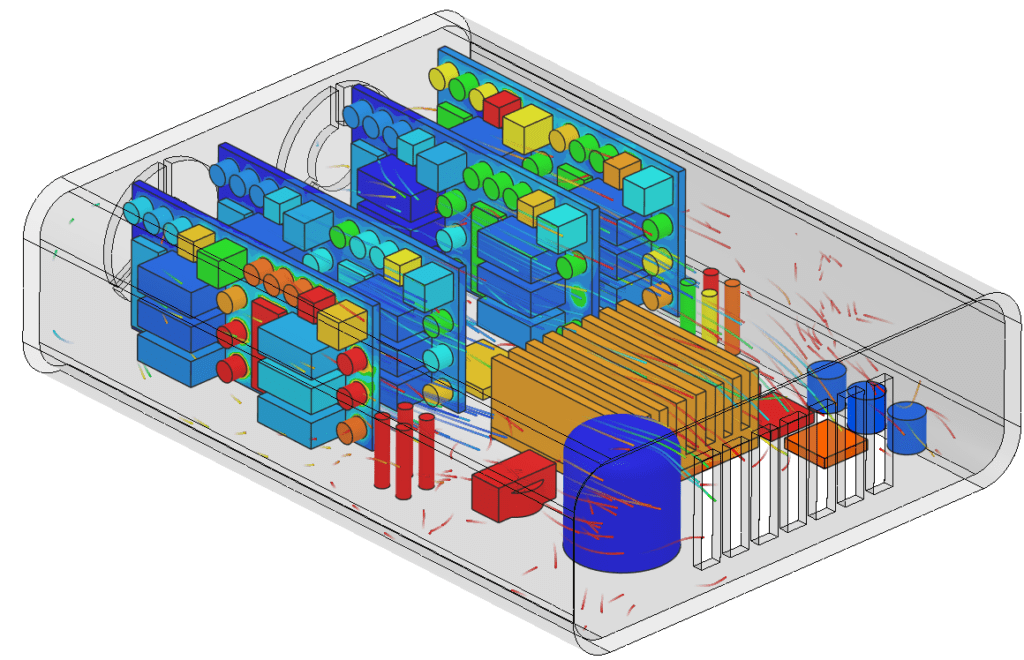 Thermal Gradient Map
What You Receive
| Deliverable | Description | Format |
|---|---|---|
| Temperature Map | Annotated temperature distribution across all components | PNG / PDF |
| Heat Flux | Directional and total heat flux vectors and contours | PNG / PDF |
| Thermal Gradient | Gradient distribution — identifies thermal stress risk zones | PNG / PDF |
| Thermal Stress | Coupled thermal-structural stress results (if applicable) | PNG / PDF |
| Engineering Report | Methodology, BCs, results interpretation and thermal management recommendations |
Industries & Applications
Industrial Heating Systems
Temperature distribution in furnaces, ovens and industrial heaters — uniformity and hot-spot control.
Insulation Performance
Evaluate effectiveness of thermal insulation systems — heat loss rate, cold-face temperature, payback analysis.
Thermal Stress Evaluation
Combined thermal + structural FEA — differential expansion causing cracking, distortion or fatigue.
Heat Exchangers
CHT simulation of shell-and-tube, plate and jacketed heat exchangers — effectiveness and NTU evaluation.
Electronics Cooling
PCB and electronics thermal management — identify overheating components and optimise airflow paths.
Process Equipment
Reactor walls, jacketed vessels and pipes — transient heat-up and cool-down profiles.
Solve Your Thermal Management Challenge
Share your geometry and thermal loading conditions — we deliver a complete temperature analysis within 5–8 working days.